
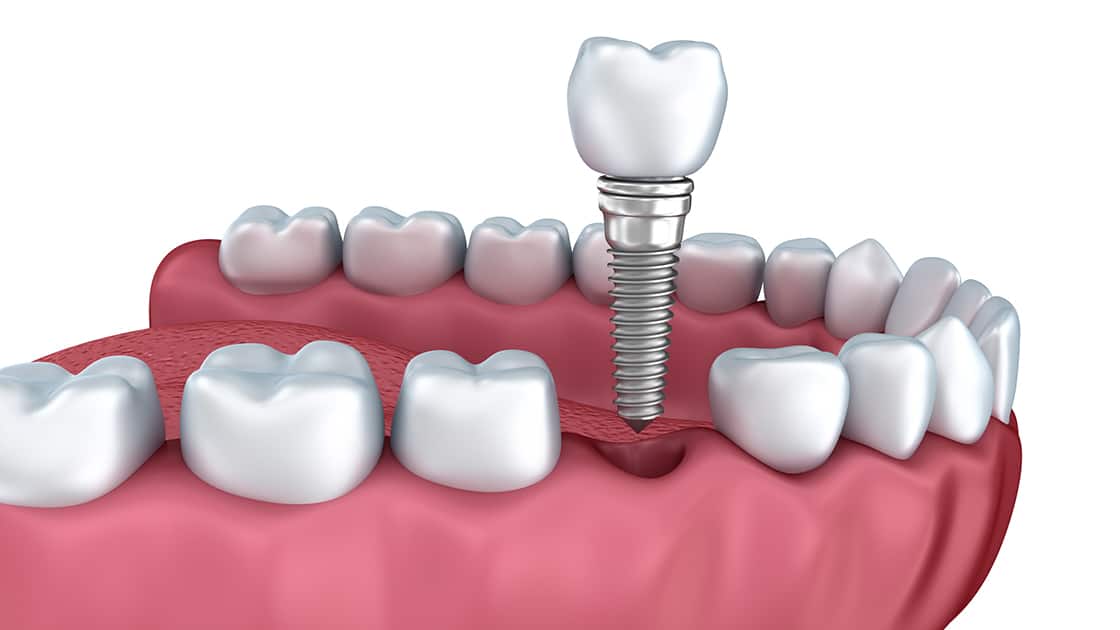
Dental implants are the most natural-looking, long-lasting solution for replacing missing teeth in Waco, TX. At Starr General Dentistry, we handle both the surgical placement and the restoration in our own office — so you stay with the team you trust from start to finish. An implant replaces a missing tooth’s root with a small titanium post that fuses with your jawbone (a process called osseointegration), creating a stable foundation that looks, feels, and functions like a natural tooth.
Implants can help preserve the health of neighboring teeth, maintain bone structure, contribute to an improved ability to chew, and provide patients with the confidence to enjoy a beautiful smile. For most patients, receiving dental implants can restore both oral health and overall well-being.
Dental implants are small anchors made of a biocompatible metal called titanium that are placed in the jawbone to replace missing teeth in the mouth. After placement, the anchors will begin to fuse with the bone over the course of a few months. After the fusing process, known as osseointegration, abutment posts are inserted into the anchors to allow for the permanent attachment of the replacement teeth. In some cases, a tooth extraction or bone grafting procedure may be needed before implant placement to prepare the jaw and ensure a strong foundation for your new smile.
The Dental Implant Procedure
The dental implant procedure typically involves several stages. During your initial dental implant consultation, our dentist will evaluate your oral health, review your jawbone density, and determine whether you are a candidate for dental implants. If bone loss or severe bone loss has occurred, a bone grafting procedure may be recommended before receiving dental implants to help restore the jaw and create a strong foundation for your new teeth.
On the day of surgery, anesthesia is administered to keep you comfortable throughout the procedure. The implant is then placed directly into the jawbone, where it will fuse with the bone over time through osseointegration. After the implant has had time to fully heal, a custom restoration is attached, giving you a fixed, permanent replacement that looks and functions like your natural teeth. Most patients are able to return to their normal routine shortly after treatment, and with proper care, dental implants can serve as a long-term solution for missing teeth.
Dental Implants vs. Removable Dentures
When considering tooth replacement options, many patients compare dental implants to removable dentures. While removable dentures can restore a smile, they may shift or slip during eating and speaking. Dental implants, on the other hand, are a fixed solution anchored directly into the jawbone. Implants help prevent bone loss in the jaw, maintain the structure of your mouth, and provide a stable, natural-feeling set of new teeth. For patients looking for a long-term solution that supports oral health and overall well-being, dental implants are a versatile option worth considering.
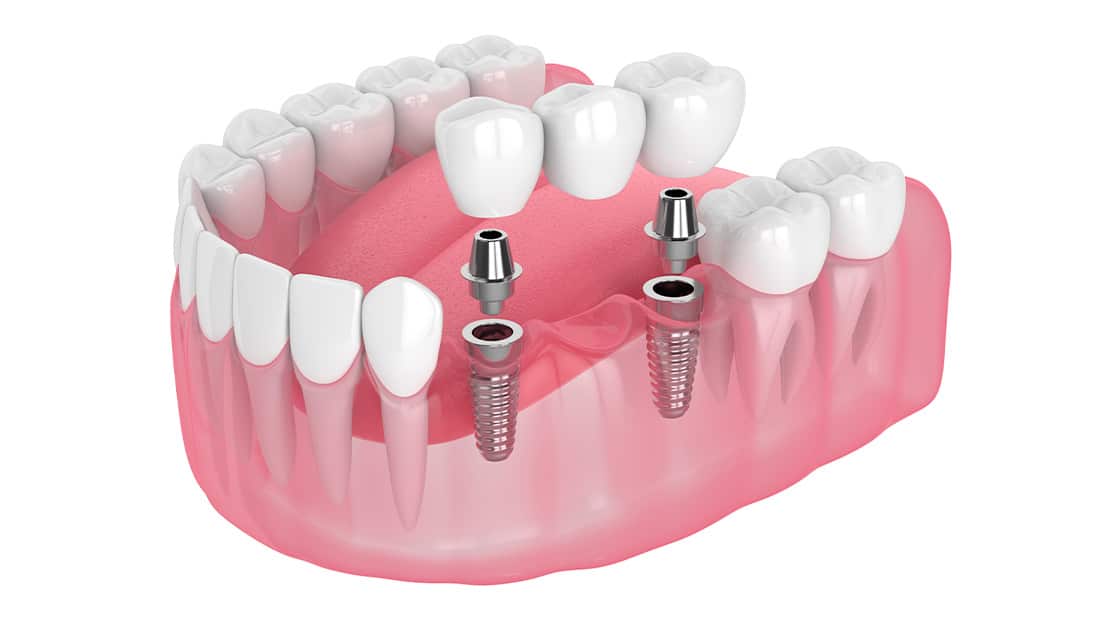
Implant Supported Bridges
An implant supported bridge is a restorative solution for spaces where three or more adjacent teeth are missing. This restoration typically requires two implants to support the bridge that provides a functional and aesthetic replacement for a patient’s natural teeth.
Because of the natural look and feel and the functional stability provided by the implants, implant supported bridges are an effective solution to replace multiple missing teeth.
A dental implant supported bridge replaces missing teeth by placing two or more dental implants to support the bridge instead of the adjacent teeth. These implants avoid putting any additional stress on your natural teeth and help preserve the health and function of the surrounding bone tissue and teeth.
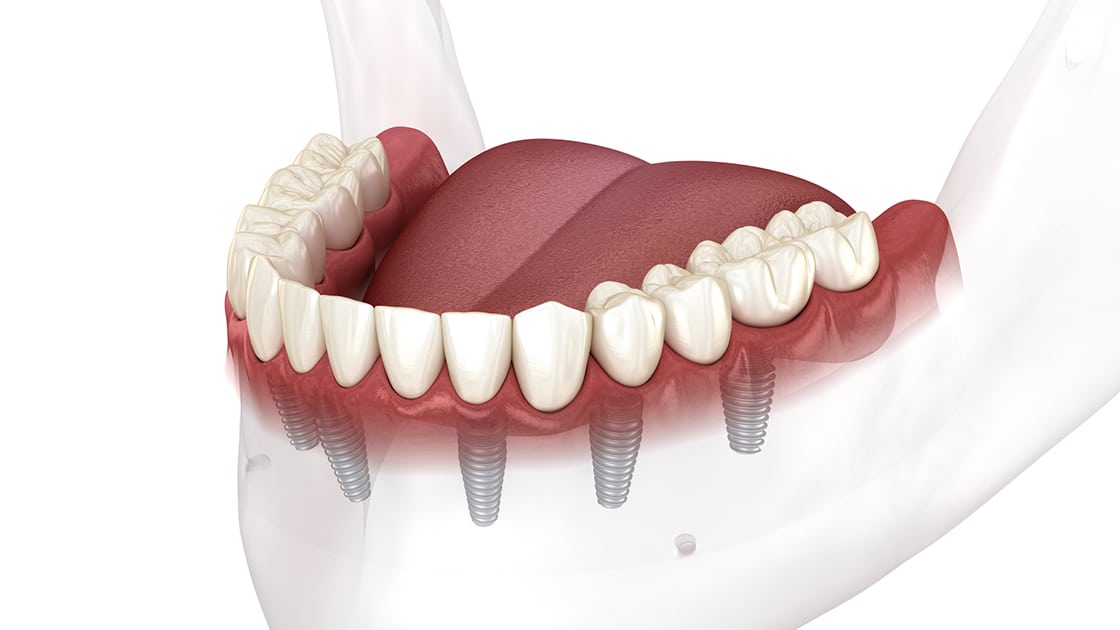
Full Arch Implant Solutions
For patients missing many or all of their teeth, implant retained or implant supported dentures may be an alternative to traditional dentures. These solutions can simulate the look and feel of natural teeth and stay fixed in place with the implants acting as anchors.
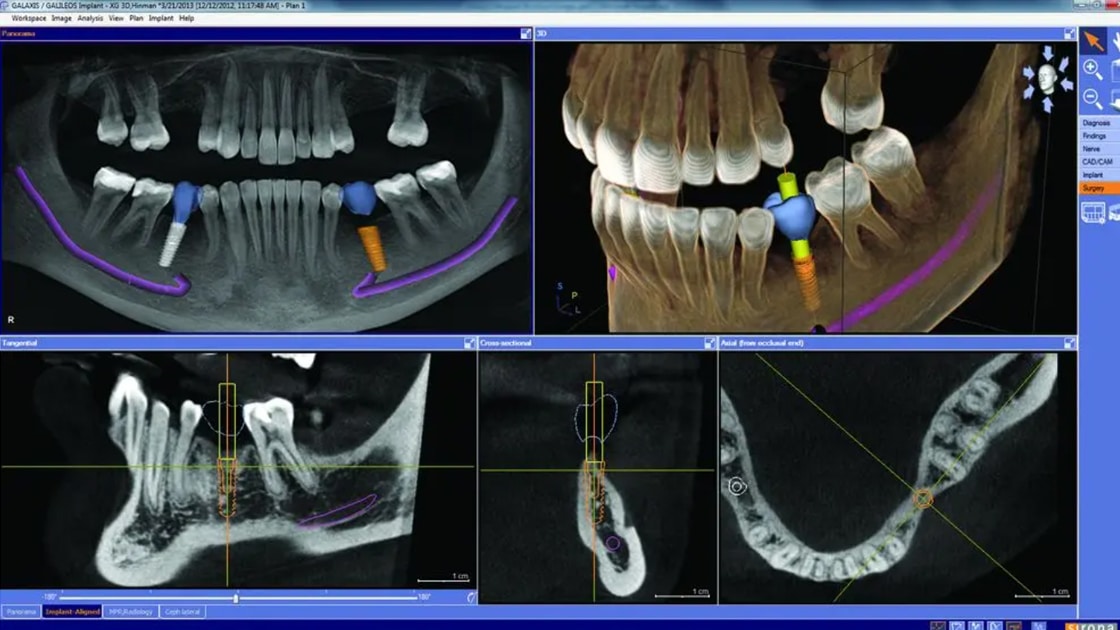
Guided Dental Implant placement
3D technology allows our doctors to more accurately place dental implants using minimally invasive techniques that improve patient comfort and healing while maintaining the highest standard of treatment and restoring your smile.
The 3D digital guidance provided by this specialized software helps our team plan the implant placement procedure. It also allows the patient to visualize the implant’s future location and its support for the final restoration. Once planning is complete, our team uses this 3D-guided implant technology to create a customized surgical guide that provides greater precision and accuracy during implant placement.
Instructions Following Implant Surgery
Schedule Your Dental Implant Consultation
If you are considering dental implants, the first step is scheduling a consultation at our Waco office. During your visit, our dentist will assess your oral health, discuss your treatment options, and create a personalized plan for restoring your smile. Whether you need a single implant, an implant supported bridge, or full arch dental implants, our practice is here to guide you through every step of the dental implant procedure. Our practice also offers cosmetic dentistry, tooth extraction, wisdom teeth removal, and a full range of dental services.
Frequently Asked Questions About Dental Implants
Q: Do you offer dental implants?
Am I a good candidate for dental implants?
How long do dental implants last?
Does it hurt to get a dental implant?
How much do dental implants cost in Waco?
Looking for a practice in the